
 Australian Dollar
Pro Interior Designers' Tips on How to Hang Wall Art
Posted by Renovator Mate on 31 Mar 2021
Buying the best furniture isn't the only way to decorate your house. Often, accent pieces are needed to complete the appearance. Since the walls take up the majority of space in a room, most homeowners and interior designers frequently use these blank spaces to add character to the interiors.
Some people will choose memorable photographs or eye-catching paintings, then hang them on the blank walls, surrounded by nice, custom picture frames. These wall decors, if done correctly, would be a talking point for anyone who spends time indoors. Others may opt for wall sculptures, such as carvings of untamed creatures, to add an element of surprise to their house.
One of the age-old conundrums of interior design is figuring out how to hang wall art appropriately. Everybody knows that a poorly hung piece of art stands out like a sore thumb, but doing it right can be difficult. That is until you are aware of the unstated laws that must be followed. We've come to put an end to this dilemma once and for all. Consider this your one-stop-shop for learning how to properly hang wall art. We've outlined every move you'll need to know to always find the ideal spot for your artwork.
Another hassle is finding the right and beautiful paints, pictures, and frames. Well, the Kace Art team has shared these tips to solve that problem of yours.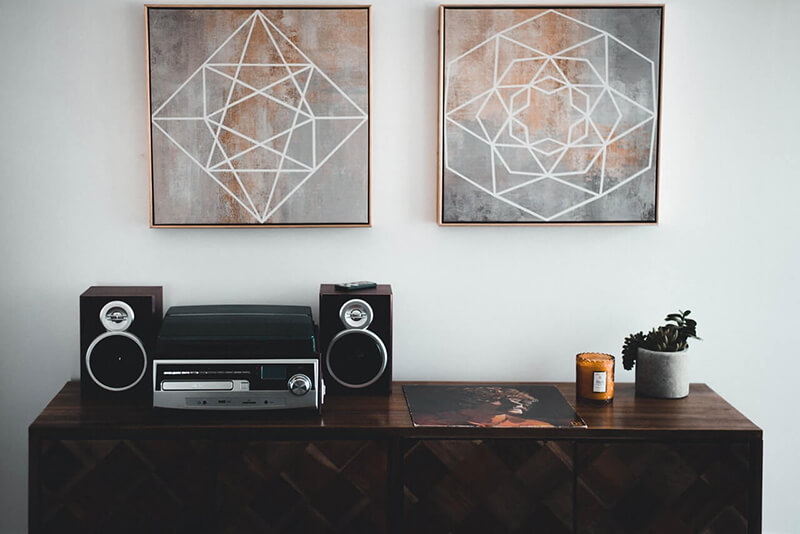
Select the Appropriate Size Artwork
First and foremost, make sure the piece of wall art you select is the right size for the space it will be decorating. Even if you have perfect hanging skills, a piece of art that is too large or too small for its wall space will look out of place. You're in luck when you're hanging wall art right behind a piece of furniture, such as a painting above a sofa or buffet. You can eyeball the measurements using a simple trick. On either side, the furniture item should be slightly longer than the wall art. You should look for a wall hanging which is two-thirds the length of your wall.
The calculation is a bit more complex if you're trying to hang the piece of art on an empty wall. (Though there is nothing that can't be fixed with a calculator.) According to prevailing wisdom, artwork can occupy four-sevenths of the wall on which it is shown. To determine those measurements, begin by measuring the wall's width and length. Then multiply each number by four-sevenths, or in decimal terms, 0.571.
Hang the Piece at Eye Level
The majority of people have a habit of hanging artwork very high. If you only remember one thing from this post, remember this: “On the centre, 57′′”. That implies that your art piece's centre should be 57 inches from the floor (not the hook). This 57-inch standard is often used in many museums and galleries to reflect the average human eye-height. It also provides a sense of symmetry in the home because all of the artwork would be centred around the same visual axis.
This law does have a few exceptions.
If your ceilings are low (less than 8-9 feet): Segment your wall vertically into quarters and hang your art in the third quadrant from the floor. Allow 8-10 inches just above the sofa back while hanging paintings above a sofa, even if this violates the 57-inch law. Also, pay attention to the distance between your artwork and the point where the wall touches the ceiling.
Over a Fireplace: To keep things in balance, lean a mirror off-centred and pair it with a sculptural partner. To draw the eye upward, add a small picture or two on top, and repeat over doorways or large chests.
Over a Nightstand: To bulk up the profile of a skinny bedside lamp, consider grouping dainty silhouettes together. Then, above the headboard, hang a statement-making mirror.
In a Hallway: Make a theme-based hallway. A chinoiserie mirror and a set of ginger jars are a good place to start. You could use bamboo brackets, with plenty of "air" between them to elevate the set and offer each jar its own attention.
Don’t Shy from Salon Style
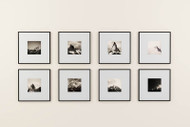
If it weren't so overwhelming, the salon-style theme for wall art might be one of the most praised & loved aspects of a space. How do you get the appearance you want without leaving too many holes in your walls? The design should be tailored to your (or your client's) preferences, but remember to adhere to the basic guidelines described in the first tip for multiple items. Salon-style also looks great when you mix and match a range of wall hangings, such as photographs, text pieces, paintings, prints, and wall sculptures!
How to Hang Wall Art
It's time to hang your wall art once you've decided on its size and location. Although this is typically a two-person project, there is a straightforward way to make it happen on your own. What you need are some paper and some tape.
Begin by tracing your wall art onto a sheet of paper. After that, cut it out to use as a guide. By determining the same length from the wire to the top of the frame, consider marking on the template to point out the location of the picture wire hook. Compare the nail mark on your model to the nail mark on the wall with the marking-side out and then tape it in place. This will allow you to take a step back to see how the wall art will appear from a distance. You are free to make changes to whatever you see suitable. Break out your nail and hammer until you're done with the positioning of the wall art. Position the nail in the designated area. The template can then be peeled away. After that, all you have to do is hang the photo.
Use Frames Wisely
While choosing your focal piece of artwork, particularly in the living room, don't forget about the frame; always keep in mind that the art will act as a wall anchor. Framing can add just as much charm and personality to a room as the artwork itself, either you go modern with monochromatic frames or switch up various vintage-style frames and photo hangers.
Aside from pictures or drawings, non-traditional wall decors such as unframed canvases, metal pieces, wooden plates, or fairy lights may be hung. These tips will assist you in filling in the blank spaces on your walls and converting your rooms into living areas. To tie the look of the house together, make sure that all of the wall decors go well together with the rest of the furniture.